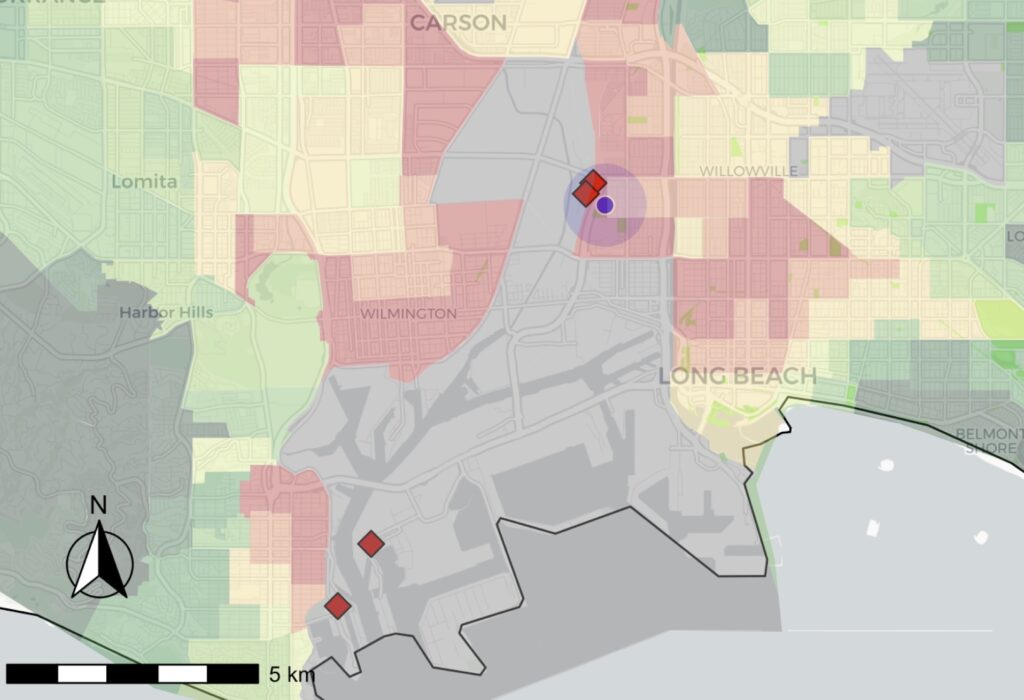
Fumigation facilities (red diamonds) in close proximity (1000m) of a west long beach community (blue dot).
Jill Johnston and Yoshira Ornelas Van Horne were first alerted of the ongoing use of Methyl Bromide by the Coalition for a Safe Environment. As is the case in many Environmental Justice communities, the problem was identified by the community long before agencies took action. A state-operated monitor was eventually placed in Long Beach, where recorded concentrations exceeded regulatory standards.
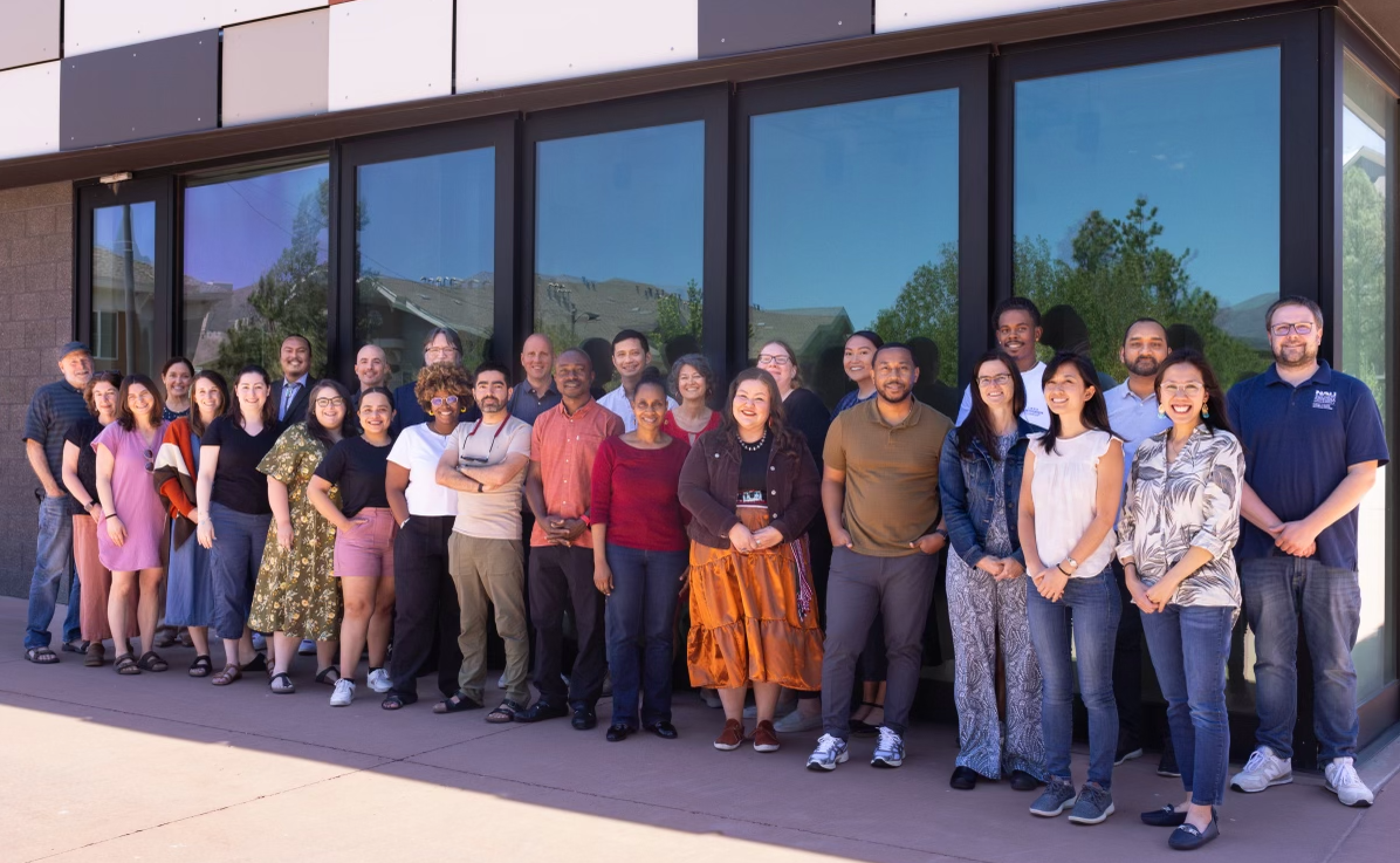
When digging into the state data they found that Methyl Bromide continues to be used across California. This is an example of why monitoring and enforcement are necessary to ensure proper public health protections are achieved. The EVC Lab is currently supporting grassroots efforts through T.H.E Impact project to push for stronger protections for impacted communities.
What’s in the air? Engaging Native American youth in the Northern Plains to reduce air pollution
A community-academic partnership with Missouri Breaks Industries Research (an American Indian-owned research center serving Indigenous communities and others in North and South Dakota) to characterize sources of air pollution and identify community-driven solutions through an emissions reduction plan.
Mapping environmental court settlements: The role of reparations in mitigating environmental harms.
Despite civil cases and settlements, largely from Clean Air and Clean Water Acts violations, resulting in over $8 billion in settlements since 1998, the effectiveness of these reparations on local communities has not been adequately assessed. This research aims to fill a gap by evaluating the impact of environmental reparations on these communities, using data from the U.S. EPA enforcement and compliance office and the American Community Survey.